
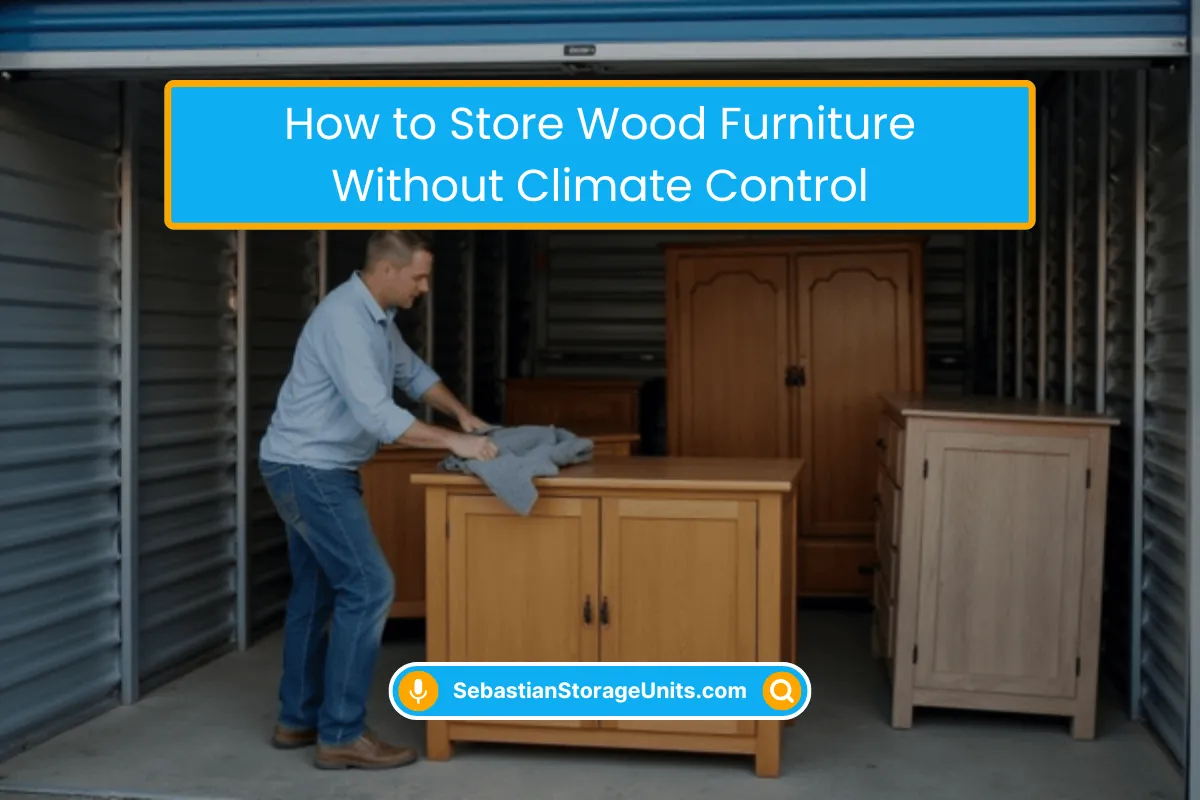
Remember that feeling of solid wood? The weight of a drawer sliding out on its runners, that smooth, sure sound? It’s not like particleboard. It’s alive. And when you have to put it away somewhere that isn’t your home—somewhere that gets dusty, or muggy, or bone-dry—it feels like a betrayal, doesn’t it? You’re trusting this thing you love to a place that doesn’t care about it.
I had this old writing desk. My dad found it at a flea market when I was a kid. It was covered in paint splatters and someone had carved their initials near the lock. He stripped it, sanded it for what felt like a hundred hours in our garage, and stained it a deep, warm walnut. It was where I did my homework, where I wrote terrible poetry. When I moved cross-country for a job, I couldn’t take it. My new apartment was a shoebox. I had to put the desk somewhere.
The Barn Experiment
My uncle said I could leave it in his pole barn. You know the kind: corrugated metal, dirt floor, smells of tractor oil and old hay. I was desperate. I did what I thought made sense. I bought a giant roll of that clear plastic wrap—the kind movers use—and I mummified that desk. I wrapped it tight, twenty times around, thinking I was sealing out the dust and the damp. I felt clever. I patted my plastic-wrapped desk and drove away.
Nine months later, I came back. The plastic was foggy on the inside. When I cut it away, the smell hit me first—sour, like forgotten laundry. The top of the desk, once so smooth, felt fuzzy. A constellation of white mold dotted the surface. The wood had swelled around the metal lock plate, cracking the veneer. I just stood there in that barn, heart sinking. I had loved that desk, and my “clever” solution had ruined it. I spent the next week with sandpaper and bleach, trying to undo the damage. The stain never matched again.
So when you ask me how to store wood furniture without climate control, I’m not giving you tips from the internet. I’m giving you the rules I wrote in my own head, standing in my uncle’s barn, feeling like a fool.
Rule 1: Never, Ever Smother It
Plastic is for sandwiches, not for heirlooms. Wood needs to breathe. If you trap its breath, you get mold. Period. What do you use? Soft, breathable barriers. The moving blanket from your last apartment move. That old quilt from college that’s too ratty for the bed but too full of memories to toss. A cotton bedsheet. Wrap it like you’re tucking in a child. Use twine or fabric strips to tie it, not tape. You’re not creating a seal; you’re putting on a sweater.
Rule 2: Give It a Fighting Chance Off the Floor
Dampness rises. Cold sinks. A concrete slab is a sponge for moisture and a sink for cold. You wouldn’t sleep on a basement floor, don’t make your furniture do it. Get it up. I use scrap wood—2x4s, old shelf boards, pallets if they’re clean. Create an air mattress of sorts. Even an inch makes a difference. This one step is maybe 30% of the battle.
Rule 3: A Little Spa Day Before the Journey
Don’t just wipe off the dust. Really clean it. Use a wood cleaner, or a whisper of mild soap in water. Dry it thoroughly. Then, feed it. For most finished pieces, a good furniture wax is like lip balm for wood. It seals the pores just a little. For oiled woods, a fresh, thin coat of the appropriate oil. You’re not just cleaning; you’re hydrating it and armoring it before it goes into the dry, harsh environment. This part feels good. It’s your goodbye.
Rule 4: Take Its Shoes Off
If a table has removable legs, take them off. Take out every drawer. Lay them flat, separately. This does two brilliant things: it keeps the drawers from warping awkwardly inside the frame, and it lets air move through the whole piece. It also makes it easier to move. Put all the screws and knobs in a baggie. Tape that baggie to the underside of the piece. Don’t just chuck it in a box. You will lose the box.
Rule 5: Be a Moisture Ninja
You can’t control the air in the whole shed or unit, but you can create a tiny, stable climate around your piece. My go-to’s? Silica gel packets. You can buy them in big, cheap tubs online. I stuff them in old socks, tie them off, and tuck them into drawers and corners. They’re like tiny, thirsty guards.
Also, plain clay cat litter. Dump a few pounds into a couple of old baking sheets or cardboard flats. Slide them under your raised-up furniture. It’s a dirt-cheap, amazingly effective moisture magnet. Swing by every few months and you’ll see it clump from the damp it’s pulled from the air.
The Real, Human Truth:
All of this? It’s a holding action. It’s what you do when you have no other choice. It worked for my mom’s rocking chair in a dry garage for a year. It’s a labor of love and worry.
But.
If you’re storing that one piece you can’t live without—the one you’d grab in a fire—you need to be honest with yourself. All the wax and socks full of silica gel in the world can’t fight off a Texas summer in a metal shed or a Minnesota winter in an uninsulated garage. The wood will still move. It will still stress.
That’s the moment I learned to stop fighting and find a better solution. After the desk disaster, I swore I’d never risk something I loved like that again. When I helped my sister store her baby’s future solid-wood crib, I told her straight: “The hacks aren’t enough for this.” We found her a climate-controlled unit. It wasn’t a dusty box; it was a clean, quiet room that stayed the same. It cost more, but she slept at night.
That’s the philosophy we built Sebastian Quality Storage on. Sure, we have standard units. But when someone comes in looking worried, asking about a grandfather clock or a vintage record cabinet, I tell them about my desk. I show them our climate-controlled spaces. I explain it simply: “It’s like putting it in a room in your house that never gets too hot or too cold. We keep it boring in there.” Sometimes, the best prep is knowing when the DIY fight isn’t worth it. For everything else, you now have my rules. The ones paid for with a fuzzy, moldy desk and a whole lot of regret.
Go be good to your stuff. It holds your history.











0 Comments